Makar Sankranti Festival: Regional Celebrations, Sacred Bathing, Traditional Recipes & Tips
Discover everything about Makar Sankranti, India’s vibrant harvest festival celebrating the sun’s journey into Capricorn. Learn authentic regional traditions from Gujarat’s kite flying to Tamil Nadu’s Pongal, explore traditional recipes featuring sesame and jaggery, understand sacred bathing rituals at holy rivers, and find practical tips for modern eco-friendly celebrations. Whether planning your first observance or deepening your understanding, this comprehensive guide covers rituals, mythology, pilgrimage sites, and contemporary adaptations for meaningful celebration.
Table of Contents
1. Introduction to Makar Sankranti
- 1.1 What is Makar Sankranti?
- 1.2 Historical Origins and Mythology
- 1.3 Astronomical Significance
- 1.4 Religious and Spiritual Importance
2. Regional Names and Variations
- 2.1 Pongal (Tamil Nadu)
- 2.2 Uttarayan (Gujarat and Rajasthan)
- 2.3 Magh Bihu (Assam)
- 2.4 Lohri Connection (Punjab)
- 2.5 Khichdi or Donation Festival (Uttar Pradesh and Bihar)
- 2.6 Poush Sankranti (West Bengal)
- 2.7 Other Regional Names
3. When and Why Makar Sankranti is Celebrated
- 3.1 Date and Calendar System
- 3.2 Sun’s Transition into Capricorn (Makar Rashi)
- 3.3 Beginning of Uttarayan
- 3.4 Harvest Festival Significance
4. Traditional Rituals and Customs
- 4.1 Holy Bath in Sacred Rivers
- 4.2 Sun Worship and Prayer
- 4.3 Charity and Donations (Daan)
- 4.4 Ancestral Offerings
- 4.5 Religious Ceremonies
5. Regional Celebrations
- 5.1 Tamil Nadu – Pongal Celebrations
- 5.2 Gujarat – Kite Flying Festival
- 5.3 Assam – Magh Bihu Festivities
- 5.4 Karnataka – Ellu Birodhu Exchange
- 5.5 Maharashtra – Tilgul Distribution
- 5.6 Punjab – Lohri and Maghi
- 5.7 West Bengal – Ganga Sagar Mela
6. Traditional Foods and Recipes
- 6.1 Til (Sesame) Based Dishes
- 6.2 Jaggery (Gur) Preparations
- 6.3 Khichdi
- 6.4 Pongal Dish
- 6.5 Tilgul and Til Ladoo
- 6.6 Undhiyu and Chikkis
- 6.7 Regional Sweet Delicacies
7. Kite Flying Tradition
- 7.1 History of Kite Flying on Makar Sankranti
- 7.2 Types of Kites
- 7.3 Kite Flying Techniques
- 7.4 International Kite Festival
- 7.5 Safety Guidelines
8. Cultural and Social Significance
- 8.1 Community Bonding
- 8.2 Rural and Agricultural Connection
- 8.3 Cultural Heritage Preservation
- 8.4 Modern Celebrations
9. Astrological and Health Benefits
- 9.1 Astrological Importance of Sun’s Transit
- 9.2 Health Benefits of Winter Sun Exposure
- 9.3 Nutritional Value of Traditional Foods
- 9.4 Seasonal Transition and Wellness
10. Important Pilgrimage Sites
- 10.1 Prayagraj (Allahabad)
- 10.2 Ganga Sagar
- 10.3 Haridwar
- 10.4 Varanasi
- 10.5 Other Sacred Locations
11. Preparations and Planning
- 11.1 Pre-Festival Shopping
- 11.2 Home Decoration
- 11.3 Menu Planning
- 11.4 Gift Ideas
- 11.5 Event Organization
12. Modern Celebrations and Adaptations
- 12.1 Urban Celebrations
- 12.2 Virtual and Digital Observances
- 12.3 Contemporary Interpretations
- 12.4 Fusion Traditions
13. Environmental Considerations
- 13.1 Eco-Friendly Kites
- 13.2 Sustainable Celebrations
- 13.3 River and Environment Protection
- 13.4 Waste Management
14. FAQs About Makar Sankranti
15. Conclusion
Makar Sankranti: Comprehensive Guide
Makar Sankranti stands as one of India’s most cherished harvest festivals, marking the sun’s celestial journey into the zodiac sign of Capricorn. This ancient celebration transcends religious boundaries and unites millions across the Indian subcontinent in joyous festivities. Unlike most Hindu festivals, which follow the lunar calendar, Makar Sankranti follows the solar calendar and falls around January 14th or 15th each year.
The festival symbolizes the end of winter’s darkness and the beginning of longer, warmer days. From kite-dotted skies in Gujarat to sacred river baths in Varanasi, this festival weaves together astronomy, agriculture, spirituality, and cultural traditions into a vibrant tapestry of celebrations that have endured for millennia.
1. Introduction to Makar Sankranti
1.1 What is Makar Sankranti?
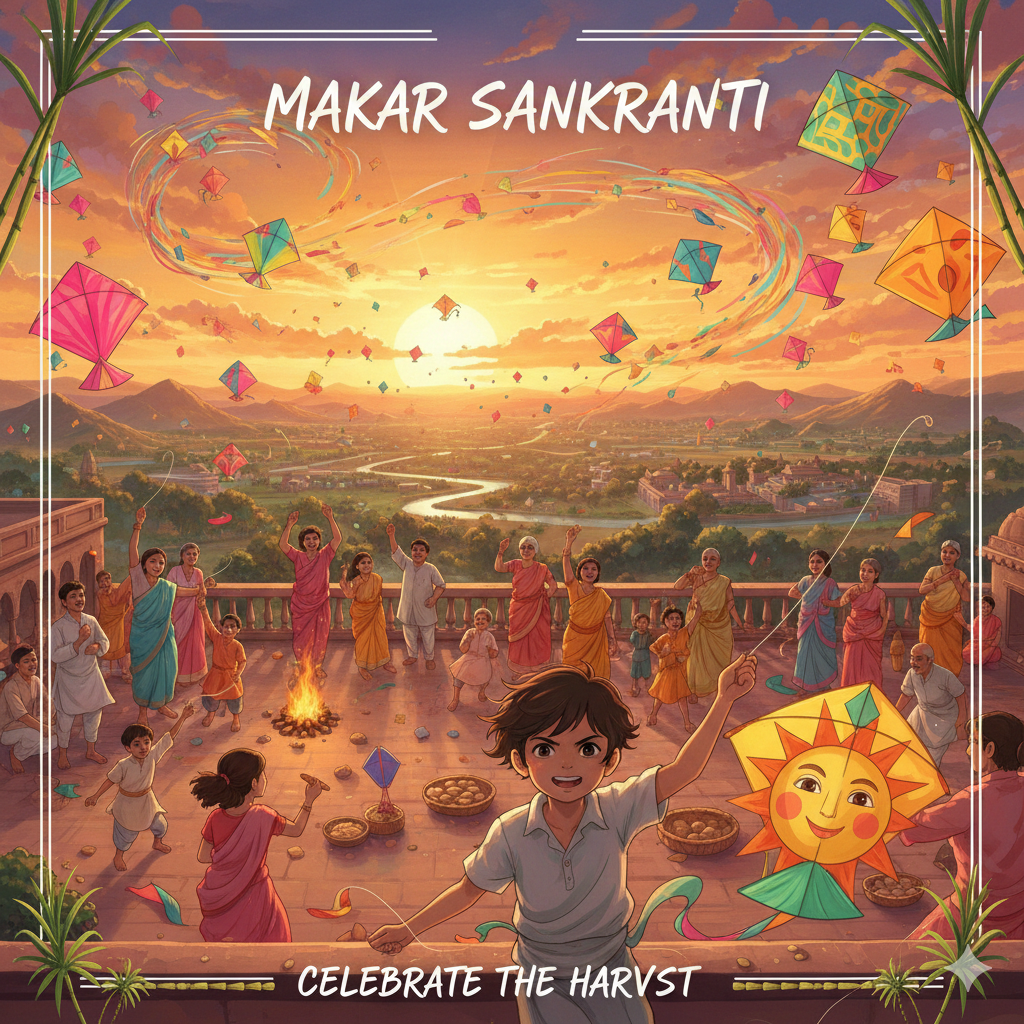
Makar Sankranti marks the auspicious transition of the sun into Capricorn, known as Makar Rashi in Hindu astrology. This solar phenomenon marks a significant shift in the cosmic energy patterns that ancient Indian astronomers observed and celebrated thousands of years ago.
The word “Sankranti” derives from Sanskrit, meaning “transition” or “movement,” specifically referring to the sun’s movement from one zodiac sign to another. Among the twelve sankranti festivals observed throughout the year, Makar Sankranti holds the highest spiritual significance because it marks the beginning of Uttarayan, the six-month period when the sun moves northward.
This northward journey symbolizes progress, enlightenment, and positive transformation in Hindu cosmology. The festival embodies gratitude for nature’s abundance, particularly the harvest season that brings prosperity to farming communities.
People across India celebrate this day with ritualistic holy baths, traditional foods made from freshly harvested crops, charitable donations, and region-specific cultural activities that reflect local heritage.
1.2 Historical Origins and Mythology
The historical roots of Makar Sankranti stretch back to Vedic times, where ancient texts reference the significance of Uttarayan and the sun’s celestial movements. According to the Mahabharata, Bhishma Pitamah, the grand patriarch of the Kuru dynasty, chose to leave his mortal body during Uttarayan, demonstrating the spiritual potency of this period.
He lay on a bed of arrows for fifty-eight nights, waiting specifically for the sun to enter its northward journey before departing his physical form, as death during Uttarayan was believed to grant direct passage to higher realms.
Another mythological narrative associates this day with Lord Surya visiting his son Shani, who rules over the Capricorn sign, symbolizing the resolution of familial conflicts and the importance of reconciliation.
The Bhagavad Gita describes Uttarayan as the path of light, through which departing souls attain liberation rather than return to the cycle of rebirth. Ancient Sanskrit texts like the Surya Siddhanta contain detailed astronomical calculations that helped priests determine the exact timing of this transition.
The festival also commemorates the day when Ganga followed Bhagiratha to the netherworld to liberate his ancestors, which is why bathing in the Ganges on this day holds immense spiritual merit. These mythological connections infuse the celebration with deep spiritual meaning beyond its agricultural significance.
1.3 Astronomical Significance
From an astronomical perspective, Makar Sankranti marks the culmination of the winter solstice and the sun’s entry into the northern hemisphere’s trajectory. This celestial event occurs when the sun reaches its southernmost position and begins its apparent northward movement along the ecliptic plane.
Ancient Indian astronomers possessed remarkable precision in tracking these solar movements, developing sophisticated calendrical systems that remain accurate today. The festival essentially celebrates the Earth’s axial tilt and orbital mechanics, though ancient observers understood these phenomena through different conceptual frameworks. During this period, daylight hours gradually increase in the northern hemisphere, bringing warmth and agricultural opportunities after winter’s dormancy.
The sun’s position directly impacts crop cycles, weather patterns, and the entire agricultural calendar that governed ancient societies. Scientific studies confirm that increased sunlight exposure during this transitional period provides essential vitamin D, supporting immune function during the winter-to-spring transition.
The correlation between astronomical observations and agricultural practices demonstrates the sophisticated scientific understanding embedded in traditional Indian culture. Modern astronomy validates the precision with which ancient calendars calculated these solar transitions, showing that traditional knowledge systems possessed genuine astronomical expertise.
This astronomical foundation distinguishes Makar Sankranti from lunar-based festivals and connects celebrants to cosmic rhythms that transcend cultural boundaries.
1.4 Religious and Spiritual Importance
Makar Sankranti carries profound spiritual significance across multiple Hindu traditions and philosophical schools. Devotees believe that holy actions performed during Uttarayan, particularly on Makar Sankranti itself, yield multiplied spiritual benefits and karmic merits.
The northward solar journey represents the soul’s progression toward enlightenment, liberation, and divine consciousness in yogic philosophy. Temples across India conduct special pujas and rituals dedicated to Surya Deva, acknowledging the sun as the visible manifestation of divine energy that sustains all life.
The festival emphasizes dharma, righteous living, and the importance of aligning human activities with natural and cosmic cycles. Spiritual practitioners consider this period especially auspicious for meditation, mantra chanting, and spiritual disciplines because the cosmic energies support inner transformation.
Many people undertake religious vows, begin new spiritual practices, or intensify existing sadhana during this period. The act of holy bathing, particularly in sacred rivers, symbolizes internal purification and the washing away of past karmic impressions. Charitable acts performed on this day are believed to reach ancestors and bring their blessings to the family. The festival reminds practitioners that physical seasons mirror spiritual seasons, and just as nature awakens from winter dormancy, the soul can awaken from spiritual ignorance.
This multi-layered spiritual significance makes Makar Sankranti more than a harvest celebration—it becomes a catalyst for personal and collective spiritual renewal.
2. Regional Names and Variations
2.1 Pongal (Tamil Nadu)
In Tamil Nadu, Makar Sankranti transforms into the four-day Pongal festival, the state’s most important harvest celebration dedicated to the sun god and agricultural prosperity. The word “Pongal” means “to boil over” in Tamil, referring to the ritual preparation of sweet rice that symbolizes abundance and prosperity.
The festival begins with Bhogi Pongal, when people discard old belongings and light bonfires, representing the elimination of past negativity. The second day, Thai Pongal, involves the ceremonial cooking of fresh rice with milk and jaggery in clay pots, allowing it to boil over as a sign of prosperity.
Families gather in courtyards or open spaces, decorating the cooking area with sugarcane stalks, banana plants, and colorful kolam designs made from rice flour. The third day, Mattu Pongal, honors cattle and farm animals that contribute to agricultural success, with cows and bulls receiving flower garlands, painted horns, and special treats.
The final day, Kaanum Pongal, focuses on family reunions, outdoor excursions, and strengthening social bonds within the community. Traditional Pongal dishes include sakkarai pongal (sweet version), ven pongal (savory version), and various preparations using freshly harvested rice, lentils, and sugarcane products.
The festival’s agricultural roots remain strong in rural areas where farmers express gratitude for successful harvests and pray for continued agricultural abundance in the coming season.
2.2 Uttarayan (Gujarat and Rajasthan)
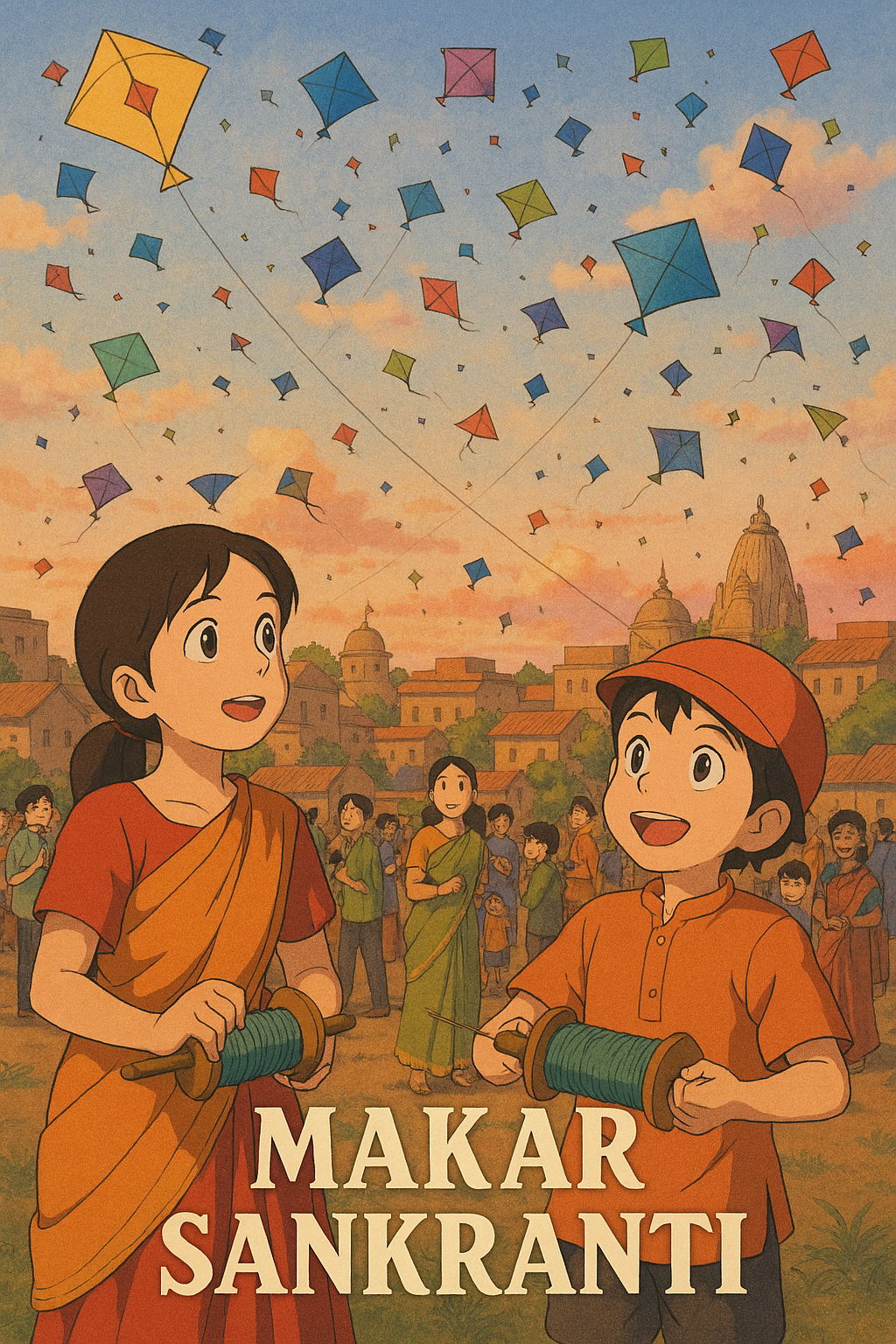
Gujarat and Rajasthan transform Makar Sankranti into Uttarayan, creating one of the world’s most spectacular kite-flying festivals that fills the sky with colorful paper creations. The entire state of Gujarat virtually shuts down for two days as people of all ages take to their rooftops for competitive kite battles and aerial displays.
The festival begins on January 13th with Uttarayan and continues on January 14th with Vasi Uttarayan, when night-flying with illuminated kites creates a magical atmosphere. Professional kite makers work for months preparing special designs, and kite markets experience tremendous business as families stock up on supplies.
The competitive aspect involves cutting opponents’ kites using glass-coated strings called “manja,” creating an exciting but potentially hazardous environment that requires skill and experience. Rooftops become social gathering spaces where families and friends share traditional foods like undhiyu (mixed vegetable curry), jalebi, fafda, chikki, and til-gur ladoos while engaging in kite battles.
The International Kite Festival in Ahmedabad attracts participants from dozens of countries, showcasing elaborate kites in various shapes including animals, cultural symbols, and modern designs. This celebration emphasizes community participation, friendly competition, and the sheer joy of outdoor activity during pleasant winter weather.
The tradition connects to the idea that kite flying exposes people to beneficial winter sunlight while symbolizing the soul’s aspiration to reach higher spiritual realms.
2.3 Magh Bihu (Assam)
Assam celebrates Makar Sankranti as Magh Bihu or Bhogali Bihu, a harvest festival centered on feasting, community gatherings, and gratitude for agricultural abundance. The word “Bhogali” derives from “Bhog,” meaning eating and enjoyment, perfectly capturing the festival’s emphasis on culinary celebrations and social bonding.
The festivities begin on the evening before with Uruka, when young people build temporary huts called “Bhelaghar” or “Meji” structures using bamboo, hay, and thatch in open fields. Communities gather around these structures for overnight feasts featuring traditional Assamese dishes prepared from newly harvested crops, including various rice preparations, pithas (rice cakes), larus (sweet balls), and meat dishes.
The morning of Magh Bihu involves lighting the Meji structures, creating massive community bonfires around which people offer prayers, perform traditional rituals, and throw rice cakes and betel nuts into the flames as offerings.
Traditional games and sports such as buffalo fighting, egg fighting, nightingale fighting, and various rural competitions provide entertainment and help preserve cultural heritage. Families prepare special treats such as til pitha, ghila pitha, and tekeli pitha using rice flour, sesame seeds, jaggery, and coconut, and share these delicacies with neighbors and relatives.
The festival strengthens community bonds in rural Assam while marking the end of the harvest season and the beginning of new agricultural cycles in this predominantly agricultural state.
2.4 Lohri Connection (Punjab)
While Lohri technically falls on January 13th, one day before Makar Sankranti, these festivals share agricultural origins and celebratory themes across North India’s farming communities.
Punjab celebrates Lohri with massive bonfires that serve as the focal point of community gatherings, featuring traditional folk dances, songs, and festive foods. Families throw offerings of popcorn, peanuts, rewri, gajak, and sugarcane into the sacred fire while circling it and offering prayers for prosperity and well-being.
The festival is particularly significant for families with newborns or recent marriages, who host special Lohri celebrations and distribute traditional sweets to the entire community. Traditional Punjabi folk songs celebrating legendary figures like Dulla Bhatti resonate through neighborhoods as people dance to the dhol’s rhythmic beats around roaring bonfires.
The next day, Maghi is observed in Punjab and includes holy river baths, visits to gurdwaras, and community langars (free communal meals). Sikhs especially revere this day as it commemorates the martyrdom of the Chali Mukte, forty Sikh warriors who sacrificed their lives defending their faith. Traditional foods include sarson da saag with makki di roti, gur rewri, gajak, peanuts, til, and various preparations using jaggery and winter-harvest crops.
The bonfire symbolizes the burning away of old negativity, while the community gathering reinforces social cohesion and shared cultural identity in Punjabi society. People give Lohri greetings to their family and friends.
2.5 Khichdi or Donation Festival (Uttar Pradesh and Bihar)
Uttar Pradesh and Bihar celebrate Makar Sankranti as Khichdi or Donation Festival, emphasizing charitable giving and the ceremonial preparation of khichdi, a nutritious combination of rice and lentils. The festival takes its name from the traditional practice of preparing and donating khichdi, along with warm winter items, to those in need.
Devotees believe that donations made on this day reach ancestors and bring their blessings upon the family while accumulating spiritual merit for the donor. People donate clothing, blankets, food grains, money, and other essentials to poor families, temples, and charitable organizations throughout both states.
The ritual bathing in sacred rivers like the Ganges, Yamuna, and their confluence at Prayagraj holds particular significance, with millions gathering for holy dips believed to cleanse sins and grant spiritual purification. The Magh Mela at Prayagraj attracts vast crowds who camp along the riverbanks for the entire month, with Makar Sankranti marking one of the most auspicious bathing dates.
Traditional foods extend beyond khichdi to include til-gud ladoos, dahi-chura (curd with flattened rice), gajar halwa, and various preparations using jaggery and sesame seeds. Rural communities organize fairs, cultural programs, and traditional sports that bring villages together in celebration.
The festival reinforces values of charity, compassion, and social responsibility while connecting people to their spiritual heritage and agricultural roots. Many families begin new ventures, investments, or important life decisions on this auspicious day, considering it a favorable time for fresh beginnings.
2.6 Poush Sankranti (West Bengal)
West Bengal celebrates Makar Sankranti as Poush Sankranti, named after the Bengali month of Poush, when the winter harvest reaches completion, and families gather to honor agricultural abundance.
The festival coincides with the massive Ganga Sagar Mela, where hundreds of thousands of pilgrims converge at Sagar Island, where the Ganges meets the Bay of Bengal, for holy dips and religious rituals.
Bengali families prepare an elaborate array of traditional sweets and snacks using freshly harvested rice, jaggery, coconut, and milk products, showcasing regional culinary expertise. Pithe, a category of Bengali rice cakes and desserts, serves as the festival’s culinary centerpiece, with varieties such as patishapta, puli pithe, chitoi pithe, and bhapa pithe prepared in homes across the state. Many families host pithe festivals where various dishes are prepared, displayed, and shared among relatives and neighbors, turning the day into a culinary celebration.
Traditional Bengali sweets like nolen gurer sandesh, payesh made with date palm jaggery, and til-naru (sesame balls) also feature prominently in festive preparations. Rural Bengal celebrates with folk songs, dances, and local fairs that preserve traditional cultural practices and provide entertainment for entire communities.
The festival emphasizes family unity, with married daughters traditionally visiting their parental homes, bringing along gifts and participating in collective pithe-making sessions. Religious significance manifests through special pujas at temples, charitable donations, and feeding the poor, while the spiritual journey to Ganga Sagar represents the ultimate expression of devotion for Bengali Hindus during this period.
2.7 Other Regional Names
Beyond these major regional celebrations, Makar Sankranti takes on various names and customs across Indian states, each reflecting local cultural flavors and agricultural practices.
In Karnataka, the festival is called Makara Sankramana or Suggi, celebrated by exchanging ellu-bella (sesame and jaggery mixture) along with sugarcane pieces and dried coconut, accompanied by the traditional greeting “Ellu birodhu, bella birodhu,” meaning “let sweetness prevail in our relationship.” Maharashtra observes Makar Sankranti with women exchanging til-gul (sesame and jaggery sweets) and saying “Til-gul ghya, god god bola,” which translates to “accept this sweet and speak sweet words.”
In Goa, the festival involves newlywed couples receiving gifts and invitations from their in-laws for elaborate meals featuring traditional Konkani dishes and sweets. Rajasthani celebrations extend beyond kite flying to include special sweets like ghevar, feeni, and tilpatty, with women singing traditional songs specific to the occasion.
The Bundelkhand region celebrates it as Sakraat or Khichdi, with large community fairs, wrestling competitions, and traditional performances. Coastal Andhra Pradesh and Telangana observe a three-day festival involving Bhogi, Sankranti, and Kanuma, each day dedicated to different rituals and celebrations.
Kerala Hindus celebrate Makaravilakku at the Sabarimala temple, where a celestial light appears on Makarajyothi, attracting millions of pilgrims. The Northeastern states have unique variations that incorporate local tribal traditions alongside mainstream Hindu practices.
This regional diversity showcases India’s cultural richness while maintaining the festival’s core themes of harvest celebration, solar worship, and seasonal transition.
3. When and Why Makar Sankranti is Celebrated
3.1 Date and Calendar System
Makar Sankranti follows the solar calendar rather than the lunar calendar used by most Hindu festivals, so it falls on approximately the same date each year—January 14th or occasionally January 15th.
This consistency distinguishes it from festivals such as Diwali and Holi, whose dates shift annually with lunar phases and vary significantly from year to year. The solar calendar connection links the festival directly to astronomical phenomena observable through consistent scientific measurement rather than traditional lunar observations.
However, due to the precession of the equinoxes—a gradual shift in Earth’s rotational axis—the actual astronomical event of the Sun’s entry into Capricorn has drifted over centuries and now occurs around mid-January, rather than matching ancient calculations exactly. This astronomical drift means that while traditional calendars mark Makar Sankranti on January 14th, the actual zodiacal transition happens slightly earlier, though this doesn’t affect the festival’s traditional celebration date.
The Hindu calendar system recognizes twelve sankrantis throughout the year, marking the sun’s transit through each zodiac sign, but Makar Sankranti receives special emphasis due to its association with Uttarayan’s beginning. In leap years, the date occasionally shifts to January 15th due to calendar adjustments, though this rarely affects the festival’s celebration, as most regions observe it according to traditional calendars.
The fixed date makes Makar Sankranti easier to plan than lunar festivals and helps maintain consistent associations with seasonal activities, agricultural cycles, and weather patterns that recur annually.
3.2 Sun’s Transition into Capricorn (Makar Rashi)
The festival’s namesake event involves the sun’s astronomical transition from Sagittarius (Dhanu Rashi) into Capricorn (Makar Rashi), a celestial movement that ancient Indian astronomers tracked with impressive accuracy. This transition represents one of twelve sankrantis or solar movements through the zodiacal belt, though Makar Sankranti holds preeminent significance in Hindu astrology and spiritual traditions.
The Capricorn sign, ruled by Saturn (Shani), holds particular astrological significance, and mythological narratives describe the sun god Surya visiting his son Shani during this period, symbolizing familial harmony amid cosmic tensions.
Astrologically, this transition marks a shift in cosmic energies, with practitioners believing that spiritual practices undertaken during this period yield enhanced results due to favorable planetary alignments.
The sun’s entry into Capricorn also signals the beginning of the harvest season in most of India, creating a natural correlation between celestial events and terrestrial agricultural cycles. Ancient agricultural societies recognized that solar positions directly influenced crop growth, rainfall patterns, and seasonal temperatures, making astronomical knowledge crucial for farming success.
The precision required to calculate this exact transition demonstrates the sophisticated mathematical and observational capabilities of ancient Indian astronomers who developed complex calendrical systems without modern instruments.
Vedic astrology assigns specific attributes to Capricorn, including discipline, structure, practicality, and material achievement, qualities that align well with harvest celebrations focusing on tangible agricultural results.
This astronomical precision, combined with astrological interpretation, creates a multidimensional understanding of the festival that balances scientific observation and spiritual symbolism.
3.3 Beginning of Uttarayan
Makar Sankranti marks the commencement of Uttarayan, the six-month period when the sun travels along the northern hemisphere’s trajectory, bringing longer days and warmer temperatures to India.
The Sanskrit term “Uttarayan” literally means “northward journey,” referring to the sun’s apparent movement northward along the ecliptic from the winter solstice onward. This period contrasts with Dakshinayan, the six-month southern journey when days shorten and temperatures decrease, creating the annual cycle that governs seasons and agricultural patterns.
Hindu scriptures, particularly the Bhagavad Gita, describe Uttarayan as the bright path or path of gods, suggesting that souls departing during this period achieve liberation rather than returning to the cycle of rebirth. The Mahabharata’s account of Bhishma waiting for Uttarayan before leaving his body exemplifies the practical application of this spiritual belief in ancient Indian culture.
From a practical standpoint, Uttarayan brings relief from winter cold and creates favorable conditions for agricultural activities, travel, and outdoor celebrations across the Indian subcontinent. The increasing daylight during this period enhances vitamin D synthesis in the body, boosting immunity and overall health during the winter-to-spring transition.
Ancient Indian medical systems like Ayurveda recognized the therapeutic benefits of increased sunlight exposure and designed seasonal health practices accordingly. The six-month Uttarayan period culminates in Karka Sankranti around mid-July when the sun begins its southward journey again, though this transition receives less cultural attention than Makar Sankranti. The cyclical nature of these transitions reminds practitioners of the eternal cycles governing existence and the importance of aligning human activities with natural rhythms.
3.4 Harvest Festival Significance
At its agricultural core, Makar Sankranti celebrates the winter harvest season when farmers across India reap the rewards of months of labor, gathering crops that will sustain communities throughout the coming year.
The festival coincides with the harvest of key crops, including rice, wheat, sugarcane, sesame, and various pulses, which form staples of the Indian diet and economy. This timing creates natural reasons for celebration as farmers experience relief from uncertainty about crop yields and can finally assess the season’s agricultural success.
Traditional festival foods directly incorporate newly harvested ingredients, creating tangible connections between celebration and agricultural abundance that participants can taste and share. The emphasis on sesame seeds and jaggery in festival preparations reflects both the harvest timing of these crops and their nutritional properties that provide warmth and energy during the cold winter months.
Rural communities in particular recognize the festival’s agricultural significance, with celebrations often held in fields or other agricultural settings where the harvest occurs. The festival provides an opportunity to thank nature, gods, and all elements that contributed to successful cultivation, including favorable weather, adequate water, healthy seeds, and protection from pests and diseases.
Many farming communities use this occasion to settle accounts, pay farmworkers, and conduct agricultural transactions before beginning preparations for the next planting season. The harvest celebration aspect transforms Makar Sankranti into an economic milestone for agricultural societies where farming remains the primary livelihood and food security depends entirely on successful crop yields.
This agricultural foundation ensures the festival remains relevant and meaningful across generations, maintaining its significance even as Indian society modernizes and urbanizes, since food production continues connecting everyone to the agricultural cycle.
4. Traditional Rituals and Customs
4.1 Holy Bath in Sacred Rivers
The ritual of taking holy baths in sacred rivers forms the centerpiece of Makar Sankranti observances across India, with millions gathering at riverbanks before sunrise to perform this purifying act.
Devotees believe that bathing in sacred waters during Sankranti washes away accumulated sins, negative karma, and spiritual impurities while bestowing divine blessings and spiritual merit. The timing proves crucial, with the most auspicious moment being the exact transition period when the sun enters Capricorn, though the entire day maintains heightened spiritual potency.
Major pilgrimage sites along the Ganges, Yamuna, Godavari, Krishna, and Kaveri rivers host large gatherings, with people traveling long distances to participate in this sacred tradition. The confluence points called “sangams,” particularly the Triveni Sangam at Prayagraj, where Ganges, Yamuna, and mythical Saraswati meet, attract the largest crowds numbering in millions during the Magh Mela period.
Traditional practice involves complete immersion in the river while chanting mantras, offering prayers to the sun god, and sometimes performing “tarpan” rituals to honor ancestors. Many devotees carry the sacred water home in containers to sprinkle their homes or use it in subsequent religious ceremonies throughout the year.
The ritual bath symbolizes not just physical cleansing but also spiritual rebirth, the washing away of past mistakes, and a recommitment to righteous living. Scientific research indicates that winter river bathing provides health benefits through cold-water exposure that stimulates circulation, boosts immunity, and invigorates the nervous system.
The communal aspect creates powerful social experiences in which people from all backgrounds share sacred spaces, temporarily transcending social hierarchies as they unite in spiritual pursuit.
4.2 Sun Worship and Prayer
Makar Sankranti celebrations involve elaborate sun-worship rituals that acknowledge Surya Deva as the source of all life, energy, and consciousness in Hindu cosmology and spiritual practice. Devotees wake before dawn to witness sunrise and perform Surya Namaskar, a sequence of yogic postures that honor the sun while providing complete physical exercise and energetic activation.
Traditional prayers include reciting Surya mantras, particularly the Gayatri Mantra and Aditya Hridayam, which are believed to invoke solar blessings and align practitioners with cosmic solar energies. Many people offer arghya, a ritual water offering made by holding water in cupped palms and pouring it toward the rising sun while chanting specific mantras and prayers.
Special pujas conducted in temples dedicated to Surya involve elaborate rituals with flowers, incense, lamps, sacred ash, and traditional offerings including red flowers, lotus, and seasonal fruits. Some devotees practice partial fasting throughout the day, consuming only specific foods after completing their sun worship and charitable activities.
The scientific understanding that the sun provides essential vitamin D aligns with spiritual practices emphasizing sun exposure, creating harmony between ancient wisdom and modern health knowledge. Astrologically, propitiating the sun during this transition period strengthens the solar influence in one’s birth chart, enhancing vitality, confidence, leadership abilities, and overall life force.
The practice connects participants to the solar cycles that govern daily, seasonal, and annual rhythms shaping human existence, yet often go unnoticed in modern indoor lifestyles. Beyond individual practice, community sun-worship ceremonies create collective spiritual experiences in which groups synchronize their prayers and intentions toward common goals of peace, prosperity, and spiritual advancement.
4.3 Charity and Donations (Daan)
The practice of charity and donations, known as daan, is an essential component of Makar Sankranti observances, with scriptures stating that charitable acts performed on this day multiply their karmic benefits.
Traditional donations include food grains, particularly rice and lentils for khichdi, along with warm clothing, blankets, sesame seeds, jaggery, oil, and other necessities that help poor families during the cold winter months. Many people donate cows or sponsor their care in gaushalas (cow shelters), considering this a high form of charity with lasting spiritual benefits.
Financial contributions to temples, charitable organizations, educational institutions, and healthcare facilities receive special attention during this period as people seek to accumulate spiritual merit.
The act of feeding Brahmins, sadhus, and poor families holds particular significance, with some households preparing elaborate meals specifically for distribution to those in need. Some devotees donate specific items in particular quantities based on astrological recommendations or family traditions, such as seven types of grains or specific weights of sesame and jaggery.
The underlying philosophy emphasizes that material prosperity should flow back into society, creating a circulation of wealth that prevents accumulation and stagnation while addressing economic inequalities. This practice transforms personal celebration into community welfare, ensuring that festival joy reaches beyond privileged households to include society’s most vulnerable members.
Modern initiatives include blood donation camps, free medical checkups, the distribution of educational materials, and other service activities organized by social organizations and religious groups. The spiritual belief underlying these practices suggests that giving away material goods creates space to receive spiritual wealth, reduces egoistic attachment to possessions, and generates compassion for others’ suffering.
4.4 Ancestral Offerings
Makar Sankranti includes important rituals honoring ancestors through tarpan and shradh ceremonies that acknowledge the continuity between living and departed family members. Many families perform special pujas to remember deceased relatives, offering food, water, and prayers that are supposedly transmitted to ancestors in their subtle realms and bring their blessings to living descendants.
The belief system underlying these practices suggests that ancestors’ spiritual evolution and well-being remain connected to their descendants’ actions, creating ongoing relationships transcending physical death. Traditional offerings include sesame seeds mixed with water, kheer (sweet rice pudding), specific grains, and other items considered pleasing to ancestral spirits according to scriptural recommendations.
Some families invite Brahmins to ritual meals, believing that feeding Brahmins on auspicious days transfers nourishment to ancestors who cannot consume physical food. The timing of Uttarayan is significant, as this period is believed to facilitate communication between the physical and subtle realms, making ancestral offerings more effective.
These practices strengthen family identity and intergenerational connections by actively remembering departed family members and acknowledging their continuing influence on family fortunes. Psychologically, ancestral rituals provide opportunities to process grief, maintain connections with deceased loved ones, and find meaning in death within the broader context of spiritual continuity.
Many people visit ancestral homes or family temples during this period, reconnecting with extended family networks and reinforcing a sense of belonging to lineages that extend backward and forward through time.
The practice also instills gratitude for ancestors’ struggles and sacrifices that enabled current generations’ opportunities while reminding participants of their own eventual place in the ancestral line.
4.5 Religious Ceremonies
Beyond individual practices, Makar Sankranti features elaborate religious ceremonies conducted in temples, community centers, and sacred spaces across India’s diverse religious landscape. Temples organize special abhishekams (ritual baths) for deities, particularly Surya, Shiva, and Vishnu, using milk, honey, yogurt, ghee, and sacred water while priests chant Vedic hymns and mantras.
Large-scale yajnas and havans (fire ceremonies) are held in temples and public spaces, with sacred fires receiving offerings of ghee, grains, herbs, and symbolic items, while mantras invoke divine blessings. Many spiritual organizations host mass prayer sessions, bhajan, and kirtan programs featuring devotional music and communal chanting, creating powerful collective spiritual experiences.
Discourses by religious leaders explaining the festival’s spiritual significance, philosophical dimensions, and proper observance methods help educate younger generations about traditional knowledge. Some temples organize large-scale annadan (food distribution), providing free meals to thousands of devotees and ensuring that celebrations benefit the entire community.
Processions carrying deity images, religious symbols, and cultural artifacts wind through streets accompanied by music, dance, and community participation, creating public displays of religious identity and cultural pride. Rural areas may engage in traditional folk religious practices unique to specific communities, preserving localized spiritual traditions distinct from mainstream Hindu practices.
These ceremonies create opportunities for collective spiritual engagement that transcends individual practice, generating communal energy and shared meaning that strengthen social bonds. The multi-layered nature of religious observances accommodates participants at various levels of spiritual understanding and commitment, from casual observers to dedicated practitioners.
5. Regional Celebrations
5.1 Tamil Nadu – Pongal Celebrations
Tamil Nadu’s four-day Pongal celebration is one of India’s most elaborate regional festivals, where agricultural thanksgiving combines with cultural pride in Tamil traditions. Preparations begin days in advance, as households clean and decorate their homes with intricate kolam designs made with rice flour, colored powders, and flower petals arranged in geometric and symbolic patterns.
The first day, Bhogi Pongal, involves discarding old and unused items by lighting bonfires before dawn, symbolizing the elimination of negativity and making space for new blessings. Young women perform special rituals around the fire, singing traditional songs and dancing around the flames in celebrations that foster memorable community bonding.
The second day, Thai Pongal, marks the main celebration when families prepare the ceremonial sweet rice dish in clay pots placed outdoors under direct sunlight, symbolizing reverence for the sun god. The moment the rice boils over sparks jubilation, with people shouting “Pongalo Pongal” in recognition of abundance and prosperity overflowing like the cooking pot.
The third day, Mattu Pongal, focuses on cattle and other farm animals that contribute to agricultural success through plowing, transport, and dairy products essential to rural livelihoods. Bulls receive special decoration, including painted horns, flower garlands, and cloth ornaments, before participating in jallikattu, a traditional bull-taming sport that generates both excitement and controversy in modern Tamil Nadu.
The final day, Kaanum Pongal, focuses on social connections as families visit relatives, enjoy outdoor picnics, and younger generations offer respect to elders while receiving blessings and gifts. Throughout the festival, traditional Tamil cuisine takes center stage, with dishes such as sakkarai pongal, ven pongal, vadai, payasam, and other preparations showcasing regional culinary expertise using freshly harvested ingredients.
5.2 Gujarat – Kite Flying Festival
Gujarat’s transformation of Makar Sankranti into a massive kite-flying festival creates one of the world’s most visually spectacular celebrations, filling the sky with colorful, geometric, and artistic kites.
The tradition reportedly dates back to the early 20th century, when community leaders encouraged rooftop kite flying to expose people to beneficial winter sunlight and create a joyful community activity.
Today, the festival represents a cultural phenomenon that defines Gujarati identity, with people from all social strata participating enthusiastically in the two-day celebration. Preparation starts months earlier as specialized artisans craft thousands of kites using tissue paper, bamboo frames, and glue, creating everything from simple geometric designs to elaborate artistic representations.
The kite markets in cities like Ahmedabad, Surat, and Vadodara transform into bustling centers where families shop for kites, strings, reels, and accessories while soaking in the festive atmosphere. The competitive element involves using glass-coated manja string to cut opponents’ kites, creating aerial battles that require skill, strategy, and quick reflexes honed through years of practice. Rooftops transform into social gathering spaces where extended families and friends congregate, sharing traditional foods like undhiyu, jalebi, fafda, and various sweets while engaging in friendly competitions.
The International Kite Festival in Ahmedabad attracts master kite makers from around the world, showcasing innovative designs, including giant kites, three-dimensional creations, and illuminated night-flying kites. Music fills the air as people play traditional Gujarati folk songs and contemporary hits, creating a soundtrack to the visual spectacle of thousands of kites dancing in the sky. The festival demonstrates how traditional celebrations can evolve to incorporate competitive sports, artistic expression, and international collaboration while maintaining cultural authenticity and local flavor.
5.3 Assam – Magh Bihu Festivities
Assam’s Magh Bihu or Bhogali Bihu celebration emphasizes feasting, community bonding, and gratitude for agricultural abundance in ways distinctive to Assamese culture and rural traditions.
The festival preparations transform villages into hives of activity as young people gather bamboo, hay, and thatch materials to construct temporary structures called Bhelaghar and tall Meji towers in open fields.
The evening before, called Uruka, involves overnight camping near these structures where community members cook and feast together, sharing traditional dishes and strengthening social bonds under starry winter skies.
Traditional Assamese cuisine takes center stage with preparations such as til pitha (sesame rice cakes), ghila pitha, sunga pitha cooked in bamboo tubes, larus made from rice and jaggery, and various meat dishes prepared from recent harvests.
The morning brings the dramatic moment when communities set fire to their Meiji structures, creating massive bonfires around which people gather to pray, throw rice cakes and betel nuts as offerings, and seek blessings for the coming year. Traditional Assamese games and competitions, including tekeli bhanga (pot breaking), egg fighting, buffalo fighting, and nightingale fighting, provide entertainment while preserving cultural heritage that might otherwise disappear in modern times.
Rural communities organize Bihu dances in which groups perform synchronized movements in traditional attire, singing folk songs that tell stories of agricultural life, love, and Assamese identity.
The festival strengthens generational knowledge transfer as elders teach younger people traditional cooking methods, ritual practices, folk songs, and games that might otherwise be lost to modernization. Community feasts ensure that celebrations benefit the entire community, with prosperous families sharing their abundance with less fortunate neighbors, demonstrating traditional Assamese hospitality and social solidarity.
5.4 Karnataka – Ellu Birodhu Exchange
Karnataka’s celebration centers on the beautiful custom of exchanging ellu-bella, a mixture of sesame seeds, jaggery, dried coconut, fried groundnuts, and sugar candy, symbolizing sweetness in relationships and social harmony.
The exchange ritual involves visiting relatives, friends, and neighbors to offer this mixture while saying “Ellu birodhu, bella birodhu, yellu madidaru oli bellige swayambhu,” which roughly translates to “let sesame and jaggery be exchanged, let all conflicts become sweet like jaggery.” This practice creates opportunities for reconciliation, with people using the festival as an occasion to resolve misunderstandings, apologize for past mistakes, and recommit to harmonious relationships.
The ellu-bella mixture carries symbolic meaning with its six ingredients representing various virtues, including sweetness, strength, togetherness, and prosperity that communities hope to embody in the coming year.
Women often prepare special versions of the mixture at home, carefully selecting quality ingredients and sometimes adding unique family touches that distinguish their preparation from others. The festival also includes preparing traditional Karnataka dishes such as ellu-unde (sesame balls), holige (sweet flatbread), payasa (milk pudding), and various rice preparations made with freshly harvested grains. Cattle receive special worship in rural Karnataka, with cows and bulls decorated with flower garlands, turmeric paste, and vermillion, and then taken in processions through villages, accompanied by music and celebrations.
Kite flying also features in urban Karnataka celebrations, though less intensively than in Gujarat, with families gathering on terraces to fly kites and enjoy quality time together. The festival reinforces community cohesion by creating structured opportunities for social interaction across households that might not regularly communicate, strengthening the social fabric that supports communities through difficult times.
Temples conduct special pujas and distribute prasadam to devotees, while some communities organize cultural programs featuring traditional Karnataka folk performances, classical music, and dance presentations.
5.5 Maharashtra – Tilgul Distribution
Maharashtra’s Makar Sankranti celebration revolves around the preparation and exchange of til-gul, sweets made from sesame seeds and jaggery, accompanied by the traditional greeting “Til-gul ghya, god god bola” meaning “accept this sweet and speak sweet words.”
This practice creates a cultural norm that promotes positive speech and harmonious relationships across society, reminding people that their words can build or destroy social harmony. Women traditionally prepare multiple varieties of til-gul, including simple rolled balls, decorative shapes, and more elaborate preparations that incorporate nuts, coconut, and cardamom to enhance flavor and nutritional value.
The sweets serve both symbolic and practical purposes: sesame provides warmth and nutrition during cold months, while jaggery offers iron and natural sweetness without the negative effects of processed sugar.
Married women participate in haldi-kumkum ceremonies, inviting female relatives and friends to their homes for informal gatherings featuring traditional snacks, sweets, and the exchange of small gifts.
These women-centered gatherings strengthen women’s social networks, providing support beyond immediate family and creating communities that support one another through life’s challenges. The festival also features special dishes such as puran poli (sweet flatbread), varan bhat (simple lentil rice), and various vegetable preparations that showcase Maharashtra’s culinary traditions, all made with seasonal ingredients.
Young people receive new clothes, and homes undergo thorough cleaning and decoration, creating a sense of renewal and fresh beginnings aligned with the sun’s northward journey. Rural Maharashtra celebrates with bullock cart races, wrestling competitions, and local fairs that preserve traditional entertainment forms and provide community gathering opportunities in agricultural settings.
The festival emphasizes the sweetness of life and relationships, using culinary traditions to express cultural values and maintain social cohesion across generations.
5.6 Punjab – Lohri and Maghi
Punjab’s celebration spans two days, beginning with Lohri on January 13th and continuing with Maghi on January 14th, creating an extended period of festivities centered around bonfires, community gatherings, and agricultural thanksgiving.
Lohri bonfires serve as focal points for neighborhood celebrations, as people gather around roaring flames to perform parikrama (circumambulation), toss offerings of popcorn, peanuts, rewri, and gajak into the fire, and offer prayers for prosperity and protection. The bonfire ritual holds special significance for families celebrating their first Lohri after a wedding or birth, who host elaborate events and distribute sweets and gifts to their extended social networks.
Traditional Punjabi folk songs and dances, particularly Giddha performed by women and Bhangra by men, create vibrant cultural expressions around the fire with rhythmic dhol beats providing musical accompaniment. The legendary figure of Dulla Bhatti features prominently in folk songs, celebrated as a Robin Hood-type hero who helped poor girls get married and resisted oppressive authorities during Mughal rule.
Traditional Punjabi foods such as makki di roti with sarson da saag, bajra rotis, gur, rewri, gajak, til, peanuts, and phuliya (popcorn) feature on festival menus, celebrating the winter harvest.
The next day, Maghi marks Makar Sankranti with holy river baths, visits to gurdwaras for prayers and community langars, and various charitable activities that express Sikh values of community service. Sikhs particularly revere this day as it commemorates the martyrdom of Chali Mukte (Forty Liberated Ones), forty Sikh warriors who initially deserted Guru Gobind Singh but returned to fight valiantly and attain martyrdom.
Rural Punjab organizes agricultural fairs, cattle exhibitions, and traditional sports competitions that celebrate farming culture and provide entertainment for entire communities. The festival reinforces Punjabi cultural identity while expressing universal themes of light overcoming darkness, community overcoming isolation, and generosity overcoming selfishness.
5.7 West Bengal – Ganga Sagar Mela
West Bengal’s celebration combines the home-based Poush Sankranti festivities with the massive Ganga Sagar Mela pilgrimage, creating a multi-dimensional festival experience encompassing family, cuisine, and spiritual journey.
The Ganga Sagar Mela attracts hundreds of thousands of pilgrims to Sagar Island, where the Ganges River meets the Bay of Bengal, a site considered among the holiest bathing sites in Hindu tradition. Pilgrims undertake challenging journeys by train, bus, and boat to reach this remote location, demonstrating remarkable devotion and the enduring power of the pilgrimage tradition in contemporary India.
The temporary tent city on Sagar Island accommodates large crowds, with government and voluntary organizations providing services such as food distribution, medical care, sanitation, and security for pilgrims.
Sadhus and spiritual seekers gather at the mela, forming a temporary community of practitioners engaged in spiritual practices, discussions, and rituals that foster an intense spiritual atmosphere.
Meanwhile, Bengali homes focus on preparing elaborate arrays of pithe (rice cakes), with mothers and grandmothers demonstrating traditional preparation methods to younger generations eager to learn family recipes.
Varieties like patishapta (rolled rice crepes with coconut filling), puli pithe (dumplings in milk sauce), chitoi pithe (steamed rice cakes), and bhapa pithe (steamed rice cakes) showcase Bengali culinary creativity and regional flavors. Some families organize pithe utsav (pithe festivals) in which multiple varieties are prepared simultaneously, displayed aesthetically, and shared among relatives and neighbors to celebrate culinary heritage.
Traditional sweets made with nolen gur (date palm jaggery), including sandesh, payesh, and rasgulla variations, feature prominently, celebrating this seasonal ingredient’s unique flavor profile. The festival emphasizes family togetherness, with married daughters traditionally visiting parents’ homes for multi-day stays that strengthen intergenerational bonds and provide opportunities for family storytelling and tradition-sharing.
Cultural programs featuring Bengali folk music, Baul songs, and traditional dances preserve regional cultural heritage while entertaining festival participants and creating memorable shared experiences.
6. Traditional Foods and Recipes
6.1 Til (Sesame) Based Dishes
Sesame seeds dominate Makar Sankranti culinary traditions across India, valued for their warming properties, nutritional density, and harvest timing that coincides perfectly with winter festival celebrations. These tiny seeds pack remarkable nutritional power, including high-quality proteins, healthy fats, calcium, iron, magnesium, and various B vitamins that support health during cold winter months.
Til ladoos, or sesame balls, are the most popular preparation: sesame seeds are roasted until aromatic, mixed with melted jaggery, shaped into balls while still warm, and allowed to cool into firm, naturally sweet treats. Variations include adding roasted peanuts, cashews, desiccated coconut, or cardamom powder to a basic sesame-jaggery mixture, creating flavor variations while maintaining traditional foundations.
Til chikki, or brittle, involves spreading the sesame-jaggery mixture thinly on a greased surface, cooling until firm, then breaking into irregular pieces that provide a satisfying crunch and sweetness. Regional variations include Karnataka’s ellu-unde, Maharashtra’s til-gul, and various North Indian preparations that use white or black sesame, depending on local preferences and availability.
Til pitha in Assam and Bengal involves incorporating sesame into rice-flour dough or using it as a filling in steamed or fried rice cakes, showcasing regional culinary creativity. Savory preparations like til ka namkeen involve roasting sesame seeds with spices, creating crunchy snacks that balance festival menus dominated by sweets. The seeds’ high oil content provides calories and satiety, making them ideal for cold weather, when the body requires additional energy to maintain temperature.
Traditional medicine systems, including Ayurveda, recommend consuming sesame during winter for its warming properties, which help balance cold environmental conditions and support internal warmth. Simple preparation methods enable families to create these treats at home, turning festival preparations into collaborative activities that strengthen bonds while preserving culinary knowledge across generations.
6.2 Jaggery (Gur) Preparations
Jaggery, or gur, serves as the primary sweetener in Makar Sankranti preparations, valued for its natural sweetness, mineral content, and alignment with traditional health principles that favor unrefined foods. This unrefined sugar retains molasses and minerals, including iron, magnesium, and potassium, which are stripped away during white sugar processing, making it nutritionally superior to refined alternatives. The warm, caramel-like flavor of jaggery complements ingredients such as sesame seeds, peanuts, coconut, and rice flour in traditional festival preparations that have evolved over centuries.
Gur ki chikki represents perhaps the most popular jaggery preparation, combining melted jaggery with roasted peanuts, sesame, or mixed nuts, then cooling and cutting into diamond-shaped pieces that provide quick energy and satisfaction.
Gajak, a North Indian specialty, involves pulling a hot jaggery-sesame mixture into thin sheets, creating a unique texture and flavor distinct from thicker preparations. Rewri, another traditional sweet, uses jaggery with sesame in proportions that create a specific texture harder than ladoos but more pliable than brittle.
Regional variations include adding desiccated coconut, popped amaranth, rice crispies, or various nuts to basic jaggery mixtures, creating diverse preparations while maintaining traditional foundations.
Liquid jaggery, or gur ka sheera, is a simple sweet preparation that combines melted jaggery with ghee, sometimes enhanced with cardamom or saffron for aromatic complexity.
Many traditional desserts, including payasam, halwa, and various puddings, use jaggery instead of white sugar, aligning with festival traditions while providing authentic flavors that modern refined sugars cannot replicate.
Ayurvedic principles recommend consuming jaggery during winter for its warming properties and its support of digestion, respiratory health, and overall vitality. The harvest timing places fresh jaggery production just before Makar Sankranti, ensuring that festival preparations use the freshest possible product with optimal flavor and nutritional value.
6.3 Khichdi
Khichdi, a comforting preparation of rice and lentils cooked with mild spices, is the signature dish for Makar Sankranti celebrations across Uttar Pradesh and Bihar. This one-pot meal provides complete protein through the rice-lentil combination, creating a nutritionally balanced dish that sustained agricultural societies for centuries before modern nutritional science recognized amino acid complementarity.
The traditional festival khichdi uses yellow moong dal and rice as its base, cooked with ghee, turmeric, cumin, and minimal spices to create a simple, easily digestible dish that even young children and older adults can enjoy.
Some variations include adding seasonal vegetables such as cauliflower, peas, or carrots, enhancing nutritional value and incorporating fresh harvest produce into festival meals. The ritual significance of khichdi extends beyond its culinary properties, with the dish symbolizing simplicity, purity, and sustenance—fundamental values that agricultural festivals aim to celebrate and preserve.
Many families prepare large quantities of khichdi specifically for donation to temples, poor families, and community feeding programs, transforming the humble dish into a vehicle for expressing charity and social responsibility.
The practice of eating khichdi on Makar Sankranti is believed to prepare the digestive system for the transition from winter to spring, with its light, warming properties supporting seasonal health adjustments. Accompaniments typically include ghee (clarified butter), yogurt, pickle, papad, and sometimes simple vegetable preparations that complement, rather than overwhelm, the main dish’s subtle flavors.
Urban adaptations have created various khichdi versions, including one-pot vegetable khichdi, protein-rich variations with multiple lentils, and even quinoa adaptations that appeal to health-conscious modern consumers. Despite these innovations, traditional plain rice-dal khichdi remains the authentic festival preparation, valued for its simplicity and for grounding elaborate celebrations in practical sustenance that nourishes body and soul alike.
6.4 Pongal Dish
The pongal dish, in both sweet and savory versions, serves as the culinary centerpiece of Tamil Nadu’s festival celebrations, symbolizing agricultural abundance through its primary ingredient: freshly harvested rice.
Sakkarai pongal, the sweet version, combines rice with moong dal, jaggery, milk, ghee, cardamom, and cashews in proportions that create a rich, sweet, aromatic preparation that satisfies both taste and cultural requirements. The traditional cooking method uses clay pots placed outdoors, where the pongal is exposed to direct sunlight as it cooks, symbolizing solar worship and creating the dramatic moment when the rice boils over.
The overflowing symbolizes abundance and prosperity, and families shout “Pongalo Pongal” when this occurs, creating memorable moments that children carry into adulthood as defining festival memories.
Ven pongal, the savory version, uses a similar rice-dal base but flavors it with black pepper, cumin, ginger, curry leaves, and ghee, creating a comforting dish that pairs well with coconut chutney and sambar. The generous use of ghee in both versions reflects the values of traditional agricultural societies, where dairy abundance signaled prosperity and ghee represented wealth to be displayed and shared during celebrations.
Cashews and raisins garnish the sweet version, added during the final cooking stages and roasted in ghee until golden, contributing textural contrast and visual appeal. The cooking process itself becomes a ritual, with women often singing traditional songs while stirring the pongal, transforming cooking from mere food preparation into cultural performance and spiritual practice.
Modern urban adaptations have created pressure-cooker methods that reduce cooking time, though traditionalists maintain that only slow outdoor cooking produces authentic flavor and preserves proper ritual significance. The pongal dish demonstrates how food serves multiple roles—providing nutrition, expressing cultural identity, enabling religious rituals, and creating shared experiences that bind communities across generations.
6.5 Tilgul and Til Ladoo
Tilgul and til ladoos are signature Makar Sankranti sweets of Maharashtra and broader North India, combining roasted sesame seeds with jaggery in ratios that create distinct textures and flavors.
The basic preparation involves dry roasting sesame seeds in a heavy pan until they release their characteristic nutty aroma and begin popping slightly, indicating proper roasting that enhances both flavor and digestibility. Meanwhile, jaggery is melted separately with minimal water and cooked to a specific consistency determined by dropping small amounts into cold water and observing whether they form soft balls, hard balls, or brittle threads.
The roasted sesame is mixed with properly cooked jaggery while both are still hot, thoroughly combined before the mixture cools, and quickly shaped into ladoos (balls) using ghee-greased palms before hardening.
Variations incorporate roasted peanuts, desiccated coconut, cashews, almonds, or cardamom powder, creating flavor complexity while maintaining the essential sesame-jaggery foundation. Some recipes add a small amount of ghee to the mixture for richness and to facilitate shaping, though traditional purists maintain that properly cooked jaggery needs no additional fat. The sesame-to-jaggery ratio determines the final texture: higher jaggery ratios produce softer, sweeter ladoos, while higher sesame ratios yield drier, more nutritious ladoos.
Regional variations exist even within states, with different communities maintaining family recipes that supposedly produce superior results based on specific proportions or preparation techniques. The preparation process often involves multiple family members working together in assembly-line fashion, with older members managing the critical jaggery cooking while younger people shape the ladoos rapidly before cooling makes shaping difficult.
These preparations store well without refrigeration; traditionally produced in large quantities, they last several weeks, though most families consume them within days due to their appealing taste and texture. The nutritional profile, combining protein, healthy fats, minerals, and natural sugars, makes these sweets relatively wholesome compared to modern confections made with refined sugar.
6.6 Undhiyu and Chikkis
Undhiyu, Gujarat’s signature mixed vegetable dish, has become a Makar Sankranti staple, representing the winter vegetable harvest’s incredible diversity and abundance. This complex preparation combines numerous vegetables, including purple yams, green beans, small eggplants, potatoes, raw bananas, fresh tuvar beans, and muthiya (spiced dumplings made from fenugreek leaves and gram flour), cooked together with intricate spice blends.
The traditional cooking method uses earthen pots buried in hot sand or coals, providing slow, even heat that allows vegetables to cook in their own moisture while developing deep, complex flavors.
The name “undhiyu” derives from the Gujarati word “undhu,” meaning “upside down,” referring to the inverted pot-cooking method that requires patience and skill to execute properly. Modern adaptations use pressure cookers or regular pots, though traditionalists maintain that only the earthen pot method produces authentic flavor and texture that defines proper undhiyu.
The dish requires significant preparation, including peeling and cutting various vegetables into specific sizes, preparing muthiya dough, creating spice pastes, and coordinating timing so all components finish cooking simultaneously.
This labor-intensive nature makes undhiyu a special occasion dish rather than an everyday preparation, with Makar Sankranti providing the perfect reason to invest the time and effort required. Meanwhile, chikkis represent Gujarat and broader India’s favorite crunchy sweet snack, combining roasted peanuts or sesame with jaggery in thin, brittle sheets that shatter satisfyingly when bitten.
The chikki-making process requires precise jaggery cooking to the hard-crack stage, creating a brittle that’s neither too hard to bite nor too soft to maintain shape. Variations include mixed-nut chikkis, rice-crispy chikkis, amaranth chikkis, and innovative modern versions made with quinoa or other contemporary ingredients, while maintaining traditional preparation methods.
These preparations showcase how festival foods balance indulgence with nutrition, using natural ingredients that nourish while satisfying cravings for sweetness and richness during celebratory occasions.
6.7 Regional Sweet Delicacies
Beyond sesame and jaggery, Makar Sankranti sweets reflect India’s deep regional diversity. Bengal celebrates with a wide variety of pithe, such as patishapta and bhapa pithe, while Assam offers til pitha and larus made from rice and jaggery. Karnataka and Maharashtra are known for holige or puran poli, rich with lentils, jaggery, and ghee. North India produces gajak and rewri, which require skilled handling of hot jaggery mixtures. Tamil Nadu features simple dishes of aval and jaggery, along with payasam. Together, these sweets preserve local ingredients, techniques, and cultural identity through food.
7. Kite Flying Tradition
7.1 History of Kite Flying on Makar Sankranti
The tradition of kite flying during Makar Sankranti dates back several centuries, with various theories explaining how this aerial activity became associated with harvest festivals. Some historians suggest that kite flying began as a method to expose people to beneficial winter sunlight, with the outdoor rooftop activity providing vitamin D while creating enjoyable community experiences during pleasant January weather.
Others trace the practice to royal court entertainments, where nobility organized elaborate kite competitions and aerial displays, which eventually spread to the general public through cultural diffusion.
The widespread adoption in Gujarat, particularly in the early 20th century, can be traced to social reforms when community leaders promoted kite flying as a healthy recreation that brought families outdoors and counteracted colonial-era social fragmentation.
The tradition gained momentum throughout the 20th century, evolving from a simple leisure activity to a defining cultural practice that represents Gujarati identity and draws international attention during major festivals.
The competitive element emerged as enthusiasts refined techniques for cutting opponents’ kites, creating sport-like dimensions that appeal to participants’ competitive instincts and entertain spectators.
Kite flying’s symbolic dimensions connect to spiritual concepts of the soul ascending toward higher consciousness, with the kite’s upward flight representing aspirations for spiritual progress and liberation from earthly attachments.
The practice also reflects agricultural society’s seasonal awareness, with January providing ideal wind conditions, clear skies, and moderate temperatures that make outdoor activities pleasant after the winter cold.
The commercialization of the tradition has created an entire industry, including kite manufacturers, string producers, accessories suppliers, and event organizers whose livelihoods depend on the annual festival season. Despite occasional controversies over safety concerns and environmental impacts, kite flying remains deeply embedded in festival celebrations, particularly in Gujarat, where identity and tradition are inseparably intertwined with colorful kites dotting the January sky.
7.2 Types of Kites
Makar Sankranti kite traditions showcase remarkable diversity in designs, materials, and construction techniques, reflecting regional preferences and centuries of refinement.
The traditional patang is the most common design—a diamond-shaped paper kite with a bamboo frame, typically 2-3 feet across —designed for maneuverability and competitive kite fighting. These basic kites come in countless color combinations and patterns, from simple solid colors to elaborate geometric designs, pictorial representations, and even kites bearing commercial advertisements or political messages.
Tukkals are smaller, simpler kites popular with children and beginners, offering easier handling and lower cost while still providing enjoyable kite-flying and opportunities for skill development.
7.3 Kite Flying Techniques
Mastering kite flying requires understanding aerodynamics, wind patterns, string tension, and manipulation techniques that separate novices from experienced enthusiasts capable of winning competitive aerial battles.
Launch technique is critical; successful launches require proper wind assessment, correct string tension, and a smooth release that allows the kite to catch wind and rise steadily without stalling or spinning.
7.4 International Kite Festival
The International Kite Festival held annually in Ahmedabad, Gujarat, has evolved into one of the world’s largest and most spectacular kite events, attracting master kite makers and enthusiasts from over forty countries.
The festival coincides with Uttarayan, transforming Gujarat’s capital into a global celebration of kite culture, aerial artistry, and cross-cultural exchange, demonstrating the potential of traditional practices to achieve international significance. International participants bring their countries’ unique kite traditions, including Japanese fighting kites, Chinese dragon kites, Indonesian wau bulan, Korean eagle kites, and countless other regional variations that showcase global kite diversity.
7.5 Safety Guidelines
Kite flying’s popularity during Makar Sankranti unfortunately poses significant safety hazards that require awareness, precautions, and, at times, regulatory interventions to prevent injuries and fatalities. The glass-coated manja string poses the greatest hazard, capable of causing severe cuts to kite flyers, bystanders, and, in particular, two-wheeler riders who encounter stray strings on roads. Many cities have banned or restricted glass-coated manja, promoting safer alternatives such as cotton strings, though enforcement remains challenging given the competitive flying culture that demands cutting capabilities.
8. Cultural and Social Significance
8.1 Community Bonding
Makar Sankranti plays a vital role in strengthening community bonds by bringing people together through shared rituals, celebrations, and exchanges. Celebrated after the harvest, it shifts the focus from individual households to collective prosperity.
Traditions like exchanging til-gul or ellu-bella encourage social interaction, while kite flying turns rooftops into shared spaces of joy and friendly rivalry. Community feasts, temple rituals, village fairs, and charitable acts create inclusive environments that bridge social and economic differences. Together, these practices reinforce social cohesion, mutual support, and a shared cultural identity in both rural and urban settings.
8.2 Rural and Agricultural Connection
Makar Sankranti holds deep meaning in rural and farming communities, where it directly marks the completion of the winter harvest. For farmers, the festival represents gratitude, relief, and reflection after months of hard work and uncertainty.
Celebrations often take place in fields or village spaces, reinforcing the link between agriculture and culture. Practices such as cattle worship acknowledge the role of animals in farming, while meals made from freshly harvested crops link labour to consumption. The festival also allows farmers to settle accounts, share knowledge, and rest briefly before the next agricultural season begins.
8.3 Cultural Heritage Preservation
Makar Sankranti plays a crucial role in preserving cultural heritage by creating recurring moments for traditional practices to be remembered and passed on. Festive cooking keeps ancestral recipes alive, while folk songs, stories, and rituals offer spaces for oral traditions to continue.
Crafts such as kite-making and decorative arts gain renewed relevance through seasonal demand. Regional languages, customs, and social values remain vibrant through festival-specific expressions and practices. Participation helps younger generations form cultural identity through lived experiences, demonstrating that heritage thrives on active celebration rather than passive preservation.
8.4 Modern Celebrations
Modern Makar Sankranti celebrations show how tradition adapts to contemporary life. In cities, festivities often move to organized venues, shaped by limited space and regulations.
Social media and digital platforms extend participation through shared photos, videos, and even virtual events. Environmental and health awareness influence practices, encouraging eco-friendly kites and lighter versions of traditional sweets. Gender roles have grown more flexible, and diaspora communities blend local influences with core traditions.
Workplace and tourism-based celebrations add new dimensions. Together, these changes reflect a living culture balancing authenticity, inclusivity, and modern values..
9. Astrological and Health Benefits
9.1 Astrological Importance of Sun’s Transit
In Vedic astrology, Makar Sankranti marks the sun’s transit into Capricorn, a shift believed to influence both personal and collective energies. The sun symbolizes vitality, purpose, and authority, while Capricorn represents discipline, responsibility, and steady progress. Together, this alignment is associated with focused effort and long-term achievement.
The start of Uttarayan is viewed as especially auspicious for new ventures, spiritual practices, and resolving past obligations. While scientific views focus on observable solar cycles rather than zodiacal effects, the tradition reflects ancient efforts to align human activity with cosmic and seasonal rhythms.
9.2 Health Benefits of Winter Sun Exposure
Makar Sankranti’s focus on outdoor celebration aligns closely with modern health science. Winter sunlight helps the body produce vitamin D, which is essential for bone strength, immune function, and metabolic health, especially when deficiency is common.
January sun exposure is typically mild and safer, making time outdoors more comfortable. Activities such as kite flying and community gatherings increase physical activity, supporting cardiovascular health. Sunlight also improves mood and regulates sleep cycles, helping counter winter fatigue or depression.
These traditions reflect an early understanding of seasonal health needs and promote well-being through simple, natural practices.
9.3 Nutritional Value of Traditional Foods
Traditional Makar Sankranti foods are both celebratory and nutritionally rich, ideal for winter needs. Sesame seeds provide healthy fats, protein, calcium, and iron, while jaggery supplies essential minerals such as iron and potassium, which are often missing in refined sugar. Together, they support energy, bone health, and immunity.
Peanuts, rice, lentils, coconut, and ghee add balanced proteins, quick energy, and fat-soluble nutrients. Simple preparation methods preserve these benefits. Modern nutrition science increasingly confirms the wisdom behind these traditional combinations, emphasizing moderation to balance nourishment with overall health.
9.4 Seasonal Transition and Wellness
Makar Sankranti marks a crucial shift from winter toward spring, supporting physical and mental adjustment to changing seasons. Traditional practices emphasize warming foods, outdoor activity, and sun exposure, helping the body adapt metabolically and energetically.
Increased social interaction helps counter winter isolation, while rituals such as early bathing and sunrise viewing support circulation and healthy sleep cycles. Acts of charity and spiritual observance add purpose and emotional balance. Together, these customs promote holistic wellness, reflecting an integrated understanding of health that connects diet, movement, mindset, and seasonal awareness..
10. Important Pilgrimage Sites
10.1 Prayagraj (Allahabad)
Prayagraj, formerly known as Allahabad, is one of Hinduism’s most sacred pilgrimage destinations and the epicenter of Makar Sankranti celebrations, as millions gather at the Triveni Sangam for holy baths during the month-long Magh Mela.
The Triveni Sangam represents the confluence of three rivers—the Ganges, Yamuna, and the mythical Saraswati—creating a supremely holy site where bathing is believed to confer spiritual benefits beyond those of single-river bathing locations.
The Magh Mela operates throughout the month of Magh (January-February), with Makar Sankranti marking one of the most auspicious bathing dates when pilgrim numbers swell dramatically compared to other mela days.
The temporary city that emerges along the riverbanks accommodates millions of pilgrims in designated camping areas, complete with basic amenities, security measures, medical facilities, and administrative services to manage the massive population.
The Kumbh Mela, held every twelve years in Prayagraj, is a major gathering that attracts global attention as possibly the world’s largest religious congregation, though the annual Magh Mela remains significant in its own right. Pilgrims believe that bathing at Sangam during Makar Sankranti washes away sins accumulated over lifetimes, provides liberation from the cycle of rebirth, and ensures heavenly realms for departed ancestors who receive spiritual benefits from their descendants’ sacred bathing.
The logistics of managing millions of people gathering simultaneously at limited riverside space require extensive government planning, temporary infrastructure construction, and coordination among multiple agencies, ensuring public safety and basic services. Sadhus, ascetics, and religious practitioners from various Hindu traditions gather at the mela, creating opportunities for darshan (viewing holy people), spiritual discussions, and exposure to diverse spiritual paths and practices. Commercial activities flourish with vendors selling religious items, food, clothing, and various goods, creating temporary markets that serve pilgrims’ practical needs while generating income for local economies.
The archaeological and historical significance of Prayagraj extends beyond religious importance, with the site featuring in ancient texts, historical events, and cultural narratives spanning thousands of years of Indian civilization.
Modern facilities, including improved transportation, organized camping areas, and better sanitation, have made pilgrimage more accessible while potentially reducing the austerity and challenge that historically characterized these spiritual journeys.
10.2 Ganga Sagar
Ganga Sagar, located on Sagar Island in West Bengal’s South 24 Parganas district, where the Ganges River meets the Bay of Bengal, is another supremely sacred pilgrimage site that attracts hundreds of thousands of devotees during Makar Sankranti.
The Ganga Sagar Mela coincides with Makar Sankranti, and pilgrims believe that bathing at this confluence, where the holy river meets the ocean, confers exceptional spiritual merit and ancestral blessings. Mythology associates Ganga Sagar with King Bhagiratha’s legendary efforts to bring Ganga to earth to liberate his ancestors, making the site especially significant for rituals honoring departed family members and seeking their blessings.
The challenging journey to reach Sagar Island involves train travel to Kolkata, bus transportation to river jetties, ferry crossings, and, finally, local transport to bathing sites, creating a pilgrimage experience that tests devotees’ commitment and determination. The temporary infrastructure established for the mela includes camping areas, medical facilities, food distribution points, and security measures to ensure pilgrims’ safety and basic comfort despite the remote location.
The convergence of hundreds of thousands of people on a relatively small island creates extraordinary crowding, particularly during peak bathing times around sunrise on Makar Sankranti, when pilgrims most desire to perform sacred ablutions.
Bengali cultural identity is strongly associated with the Ganga Sagar pilgrimage; the saying “Sab tirtha bar bar, Ganga Sagar ek bar” (“all pilgrimage sites many times, but Ganga Sagar once”) underscores the site’s supreme importance in Bengali Hindu consciousness.
The mela features religious discourses, devotional music performances, and gatherings of sadhus, creating a spiritual atmosphere beyond just ritual bathing, offering opportunities for religious education and spiritual inspiration. Environmental concerns arise regarding the ecological impact of large temporary human populations on sensitive island ecosystems, necessitating careful waste management and environmental protection measures.
The economic impact on local communities provides important seasonal income for island residents, ferry operators, vendors, and service providers, whose livelihoods depend significantly on mela-related activities.
10.3 Haridwar
Haridwar, situated where the Ganges River descends from the Himalayan foothills into the northern Indian plains, is one of Hinduism’s seven holiest cities and attracts large crowds during Makar Sankranti to seek blessings through sacred river bathing.
The name Haridwar translates as “Gateway to God,” reflecting the city’s significance as a portal to spiritual realms and a major pilgrimage destination for Hindus seeking religious merit and spiritual advancement.
Har ki Pauri, the main bathing ghat, serves as the focal point for Makar Sankranti activities, with pilgrims gathering for ritual bathing, prayers, and ceremonies believed to cleanse sins and provide spiritual purification. The belief that bathing in the Ganges during Makar Sankranti washes away accumulated karmic debts and offers liberation from the cycle of rebirth motivates millions to undertake pilgrimages despite physical hardships and travel expenses.
The city’s religious infrastructure includes numerous temples, ashrams, and dharamshalas (pilgrims’ resthouses) that provide accommodation, religious services, and spiritual guidance for visitors seeking more than brief bathing rituals.
The evening Ganga Aarti at Har ki Pauri offers a spectacular devotional experience with synchronized lamp offerings, devotional singing, and mass participation, transforming the riverbanks into stages for collective spiritual expression.
Haridwar’s position at the Himalayan foothills provides access to other significant pilgrimage site,s including Rishikesh, Badrinath, Kedarnath, and the Char Dham circuit, making it an important transit point for larger pilgrimage journeys.
The relatively accessible location, compared with more remote sacred sites, makes Haridwar particularly popular with elderly pilgrims, families with children, and urban residents seeking spiritual experiences without undue hardship. Commercial aspects have intensified, with the city hosting numerous shops selling religious items, tour operators offering pilgrimage packages, and hospitality services catering to a diverse range of pilgrims, from budget travelers to luxury tourists. Environmental challenges stem from large human populations, which generate pollution, waste management issues, and ecosystem stress, requiring government and civil society interventions while balancing religious significance with ecological sustainability.
Traditional festivals, including Kumbh Mela every twelve years and annual Kanwar Yatra, draw even larger crowds than Makar Sankranti, though the January festival remains significant in Haridwar’s annual religious calendar. Modern developments, including improved transportation, better infrastructure, and enhanced facilities, have made the Haridwar pilgrimage more comfortable while potentially reducing the ascetic demands that historically characterized these spiritual journeys, which historically required genuine sacrifice and devotion.
10.4 Varanasi
Varanasi, India’s oldest living city and one of Hinduism’s most sacred sites, hosts intense Makar Sankranti celebrations, with pilgrims gathering along the Ganges ghats for ritual bathing, prayers, and ceremonies seeking spiritual merit and divine blessings.
The city’s association with Lord Shiva and its reputation as a leading pilgrimage destination, where death and cremation are supposedly believed to guarantee liberation from the cycle of rebirth, create an exceptional spiritual atmosphere during major festivals.
The multiple ghats lining the Ganges in Varanasi—including famous locations like Dashashwamedh Ghat, Assi Ghat, and Manikarnika Ghat—offer diverse bathing sites that accommodate different pilgrim preferences and spiritual traditions.
The sunrise bathing experience in Varanasi combines physical cleansing with spectacular visual beauty as dawn light illuminates ancient architectural structures, creates golden reflections on the water, and reveals the city’s timeless spiritual character.
Beyond bathing, pilgrims visit numerous temples, including Kashi Vishwanath Temple, participate in religious ceremonies, receive blessings from priests, and sometimes consult astrologers or spiritual teachers for guidance and to perform specific rituals.
The city’s unique cultural atmosphere, blending commerce, spirituality, death rituals, and daily life, creates intense experiences for visitors confronting life’s fundamental questions within religiously saturated environments.
Traditional music, particularly classical forms associated with Varanasi’s cultural heritage, sometimes accompanies festival celebrations, creating auditory dimensions complementing visual and ritual experiences.
The relatively tourist-friendly infrastructure, compared with that at more remote pilgrimage sites, makes Varanasi accessible to international visitors seeking to experience authentic Hindu pilgrimage culture and spiritual practices. Photography opportunities attract both religious pilgrims documenting their spiritual journeys and secular tourists/photographers seeking striking images of religious practices, ritual activities, and cultural expressions, though photography ethics require respecting participants’ privacy and sacred space boundaries.
The narrow medieval streets, ancient buildings, and dense crowds create challenging physical environments that require careful navigation, health precautions, and vigilance over personal belongings to avoid theft or loss.
Environmental concerns, including severe pollution of the Ganges, have prompted cleanup initiatives to restore the river’s health while maintaining its religious functions and sacred status, despite ongoing contamination. Modern tensions between Varanasi as a living religious city and a heritage site/tourist destination create ongoing negotiations over development, modernization, and the preservation of its authentic spiritual character amid commercial pressures and tourism growth.
10.5 Other Sacred Locations
Beyond the major pilgrimage sites, numerous other sacred locations across India hold special significance during Makar Sankranti, offering devotees diverse options for spiritual practices and regional religious expressions. Kurukshetra in Haryana, famous as the battleground of the Mahabharata war and the setting for the Bhagavad Gita’s teachings, attracts pilgrims seeking spiritual merit through bathing in sacred tanks believed to have been created by Lord Vishnu.
Srirangam, near Tiruchirappalli in Tamil Nadu, hosts one of India’s largest functioning Hindu temple complexes, where special programs during the Pongal season draw devotees for elaborate rituals and festivals.
The Krishna River ghats at various locations, including Vijayawada and Rajahmundry in Andhra Pradesh, become pilgrimage destinations where devotees perform sacred bathing and ancestral offerings during the Sankranti period. Sabarimala Temple in Kerala observes the Makaravilakku festival during this period, when thousands of pilgrims witness the appearance of a celestial light on Makarajyothi day, creating powerful collective spiritual experiences.
Narmada River ghats, particularly at locations like Amarkantak, where the river originates, and Omkareshwar, where ancient temples stand, draw pilgrims seeking blessings through parikrama (circumambulation) and sacred bathing. Gangotri, the source of the Ganges in the Himalayas, while difficult to access in January due to harsh winter conditions, remains symbolically significant: prayers are directed to the source while bathing in more accessible downstream locations.
The Godavari River at Nashik and other locations along its course offer sacred bathing sites, particularly significant during years when the Kumbh Mela is held in this region.
Ujjain in Madhya Pradesh, another Kumbh Mela site, maintains year-round religious significance with Makar Sankranti bringing increased pilgrim activity to temples and Shipra River ghats.
Coastal locations where rivers meet the ocean beyond Ganga Sagar, including sites along India’s extensive coastline, serve local communities seeking nearby pilgrimage options without traveling to major destinations. Rural communities often have local sacred tanks, ponds, or river sections considered spiritually significant within regional religious frameworks, demonstrating that pilgrimage importance exists at multiple scales from internationally famous sites to locally revered village sacred spots.
The diversity of sacred locations ensures accessibility for pilgrims with varying economic resources, physical capabilities, and travel limitations, while maintaining traditions that require physical presence at sacred sites rather than merely abstract spiritual practice.
11. Preparations and Planning
11.1 Pre-Festival Shopping
Pre-festival shopping requires purchasing sesame seeds, jaggery, rice, lentils, and specialty ingredients from traditional markets. Kite enthusiasts stock up on paper kites, manja string, and reels. Clothing stores offer ethnic wear, including sarees and kurtas. Sweet shops prepare festival specialties, while decorative items such as rangoli colors and flower garlands fly off the shelves. Early shopping prevents stock shortages and price increases.
11.2 Home Decoration
Thorough cleaning precedes decoration, creating fresh spaces for celebrations. Rangoli designs using colored powders or rice flour adorn entrances. Fresh marigold garlands and jasmine strings add natural beauty. Oil lamps and electric lights create a warm ambiance. Torans mark doorways as auspicious spaces. Tamil homes display sugarcane stalks and banana plants to symbolize abundant harvests. Living rooms and puja areas receive special attention for worship ceremonies.
11.3 Menu Planning
Menu planning balances traditional dishes such as til-gul, khichdi, and regional specialties with dietary restrictions and time constraints. Advance preparation of items such as sesame ladoos distributes the workload over multiple days. Consider guest preferences, portion sizes, and ingredient availability. Include both sweet and savory options. Written plans prevent forgotten items and enable efficient grocery shopping. Collaborative family planning honors the preferences of multiple generations.
11.4 Gift Ideas
Traditional sweets, including til-gur and ladoos, make classic gifts. Dry fruit boxes are suitable for all recipients, regardless of dietary restrictions. Clothing items such as sarees or kurtas convey care and practical utility. Handicrafts support artisans while providing culturally meaningful objects. Gift baskets combine multiple items, showing thoughtfulness. Kitchen items, books, and personalized gifts demonstrate extra consideration. Children enjoy toys and age-appropriate present,s creating positive festival associations.
11.5 Event Organization
Event organization coordinates guest invitations, activity planning, and logistics management. Prepare guest lists that balance inclusivity with space constraints. Plan activities such as kite-flying competitions, traditional games, or cultural performances. Choose appropriate venues considering guest numbers and activity types. Coordinate cooking through in-home preparation, catering, or a combination of both. Arrange seating, service plans, and children’s activities. Establish meal, ceremony, and entertainment schedules to ensure smooth flow.
12. Modern Celebrations and Adaptations
12.1 Urban Celebrations
Urban celebrations adapt to apartment living with designated kite-flying spaces and rooftop gatherings. Time-pressed professionals purchase ready-made sweets and simplified meals. Resident associations organize community events for individuals lacking extended family networks. Regulations restrict traditional activities like bonfires. Multicultural populations create cross-cultural learning opportunities. Commercial options, including catering services and restaurant menus, offer convenient participation but may sacrifice authenticity.
12.2 Virtual and Digital Observances
Video calling platforms connect geographically dispersed families during ceremonies and meals. Live streaming enables virtual participation in temple rituals and cultural programs. Social media hosts recipe contests and kite-flying challenges, building digital communities. Online shopping provides access to traditional ingredients unavailable locally. Recipe tutorials democratize culinary knowledge. Digital documentation transforms celebrations into performative activities shared with external audiences, creating new dimensions of participation.
12.3 Contemporary Interpretations
Contemporary interpretations emphasize universal themes such as gratitude, renewal, and seasonal awareness, enabling inclusive participation. Environmental perspectives view festivals as opportunities to foster ecological consciousness. Social justice interpretations foreground charity and community welfare. Gender equality challenges traditional roles, promoting equal participation for women. Psychological approaches highlight mental health benefit,s including social connection and meaningful ritual. Scientific perspectives acknowledge astronomical and health knowledge while separating supernatural beliefs.
12.4 Fusion Traditions
Diaspora communities create hybrid celebrations that combine Makar Sankranti with host culture traditions, holding weekend events when workweeks prevent traditional observance. Cross-cultural families negotiate traditions honoring multiple backgrounds. Culinary fusion adapts recipes to local ingredients and contemporary tastes. Fashion blends traditional ethnic wear with modern styling. Technology integration introduces augmented reality experiences. Global awareness incorporates elements from multiple Indian regional variations, creating comprehensive celebrations beyond single ancestral traditions.
13. Environmental Considerations
13.1 Eco-Friendly Kites
Traditional paper kites decompose relatively quickly, but plastic-coated versions and glass-coated manja strings pose significant environmental hazards. Glass manja can injure humans, birds, and animals and persist as hazardous debris. Biodegradable alternatives include organic cotton strings and recycled paper kites with natural dyes. Some innovators create seed-embedded plantable kites. Educational campaigns promote eco-friendly options, though cultural resistance and enforcement challenges persist.
13.2 Sustainable Celebrations
Sustainable practices address waste generation, resource consumption, and pollution. Reduce packaging by bulk purchasing and using reusable containers. Reduce food waste by planning carefully and composting organic scraps. Eliminate plastic using traditional serving vessels and banana leaves. Source ingredients locally to support regional farmers. Conserve energy through natural lighting and collective cooking. Coordinate transportation through carpooling. Choose experience gifts over material products to reduce consumption and waste.
13.3 River and Environment Protection
Sacred rivers are at risk of catastrophic pollution from industrial discharges, urban sewage, agricultural runoff, and religious offerings. Government initiatives such as Namami Gange aim for a comprehensive cleanup through wastewater treatment and industrial regulation. Campaigns promote eco-friendly biodegradable offerings. Volunteer cleanup efforts follow festivals. Alternative practices include symbolic bathing in clean water. Ecological restoration requires revegetation, wetland restoration, and biodiversity protection. Legal frameworks grant rivers personhood status, ensuring protection.
13.4 Waste Management
Massive temporary populations at pilgrimage sites generate waste exceeding infrastructure capacity. Fallen kites, food-preparation scraps, decorative waste, and single-use products create significant cleanup challenges. Waste segregation into organic, recyclable, and residual categories enables appropriate treatment. Composting transforms organic waste into soil amendments. Recycling diverts materials from landfills. Public awareness campaigns educate participants about proper disposal. Volunteer cleanups address inadequate official services. Structural solutions require improved municipal infrastructure and funding.
14. FAQs About Makar Sankranti
Q: Why does Makar Sankranti fall on the same date every year, unlike other Hindu festivals?
A: Makar Sankranti follows the solar calendar rather than the lunar calendar used for most Hindu festivals. It marks the sun’s astronomical entry into Capricorn (Makar Rashi), which occurs around January 14th or 15th each year. This solar calendar alignment gives it a fixed date, similar to Western holidays like Christmas, while lunar calendar festivals like Diwali and Holi shift dates annually.
Q: Is Makar Sankranti only celebrated by Hindus?
A: While predominantly a Hindu festival, Makar Sankranti is celebrated across religions in India as a harvest and cultural festival. Sikhs observe Maghi with special significance, while people from various backgrounds participate in regional celebrations such as kite flying in Gujarat and Pongal in Tamil Nadu. The agricultural and seasonal aspects transcend religious boundaries, making it an inclusive celebration in many regions.
Q: What is the significance of sesame seeds and jaggery in Makar Sankranti celebrations?
A: Sesame seeds and jaggery are traditional because they’re harvested during winter and provide warming, calorie-dense nutrition during cold months. Nutritionally, they offer proteins, healthy fats, iron, calcium, and natural sugars. Symbolically, they represent sweetness in relationships and prosperity. The combination aligns with Ayurvedic principles that recommend warming foods during the winter.
Q: Can I celebrate Makar Sankranti if I’m not in India?
A: Absolutely. Diaspora communities worldwide celebrate through local Indian cultural organizations, community centers, or private gatherings. Adaptations include holding weekend celebrations when the actual date falls on a workday, using locally available ingredients to prepare traditional foods, and connecting virtually with family in India. The festival’s core themes of gratitude, renewal, and community remain meaningful regardless of location.
Q: Is the glass-coated manja string used in kite flying dangerous?
A: Yes, glass-coated manja poses serious hazards. It can cause severe cuts to kite flyers, bystanders, and particularly two-wheeler riders encountering stray strings. It also injures and kills birds through entanglement and cuts. Many jurisdictions have banned it, promoting safer cotton string alternatives, though enforcement remains challenging. Eco-friendly and safety-conscious celebrations are increasingly encouraged.
Q: What’s the difference between Lohri and Makar Sankranti?
A: Lohri falls on January 13th, one day before Makar Sankranti, and is primarily celebrated in Punjab with bonfires, folk music, and traditional foods. Makar Sankranti on January 14th has pan-Indian significance, marking the sun’s astronomical transition. While both mark the end of winter and agricultural abundance, they have distinct regional traditions and rituals, though they’re observed consecutively in North India.
Q: How can I make Makar Sankranti celebrations more environmentally friendly?
A: Use biodegradable paper kites and cotton strings instead of plastic materials and glass-coated manja. Choose reusable serving items over disposables. Source ingredients locally and seasonally. Compost food waste. Use natural decorations, such as flowers, instead of plastic. Minimize water waste. Share resources through community celebrations rather than duplicating efforts across households. Consider charitable activities focusing on environmental causes.
Q: What should I wear for Makar Sankranti celebrations?
A: Traditional ethnic wear is popular but not mandatory. South Indians might wear silk sarees or traditional dhotis. In Gujarat and Rajasthan, colorful traditional outfits are common for kite flying. North Indians might wear kurta-pajamas or salwar-kameez. Urban celebrations often feature fusion wear that combines traditional elements with modern styles. Comfort is important, especially for outdoor activities like kite flying.
Q: Are there any dietary restrictions during Makar Sankranti?
A: There are no universal dietary restrictions for Makar Sankranti like some Hindu festivals. However, some devotees observe a fast before taking their ritual bath and offering prayers. Many people prepare vegetarian meals on this day. The festival emphasizes specific traditional foods rather than restrictions, though individual families might have their own customs.
Q: How do I explain Makar Sankranti to my children in a way they’ll understand and appreciate?
A: Focus on relatable themes like seasons changing, being grateful for food, sharing with others, and spending time with family. Use activities such as kite flying, cooking together, or craft projects to make decorations. Share stories from mythology in age-appropriate ways. Emphasize fun aspects while explaining that festivals help us remember what’s important and connect with our heritage. Let them experience the joy rather than just learning facts.
15. Conclusion
Makar Sankranti is one of India’s most vibrant and meaningful festivals, weaving together astronomical precision, agricultural thanksgiving, spiritual significance, and cultural celebration into a multidimensional observance that has endured for thousands of years. From the kite-filled skies of Gujarat to the sacred riverbanks of Varanasi, from the elaborate Pongal preparations in Tamil Nadu to the community feasts in Assam, the festival’s regional diversity demonstrates India’s incredible cultural richness while maintaining common threads that unite millions in shared celebration. The festival’s solar calendar foundation connects it to observable natural phenomena, grounding spiritual practices in astronomical realities that ancient Indian scientists understood with remarkable precision.
The celebration transcends mere ritual or entertainment, serving essential functions in maintaining cultural identity, transmitting traditional knowledge, strengthening community bonds, and marking seasonal transitions that continue affecting human life despite modern technology’s attempts to insulate us from natural cycles. Traditional foods prepared during the festival combine nutritional wisdom that addresses seasonal health needs with symbolic meanings that express cultural values, nourishing body, culture, and spirit simultaneously. The charitable emphasis transforms personal celebration into social welfare, addressing inequality while generating compassion and social responsibility among privileged community members.
Modern challenges, including urbanization, environmental concerns, changing family structures, and globalization, require thoughtful adaptations balancing tradition preservation with contemporary relevance and sustainability. The emergence of eco-friendly practices, virtual celebrations, and contemporary interpretations demonstrates the vitality and capacity of living traditions to evolve while maintaining their essential character and meaning. Diaspora celebrations demonstrate that geographic displacement doesn’t necessarily destroy cultural connections when communities commit to preserving them through intentional practices and intergenerational transmission.
The festival ultimately reminds us of fundamental truths: we remain dependent on agricultural cycles for sustenance regardless of urban lifestyles; seasons continue cycling through changes requiring human adaptation; community and family connections provide meaning, support, and identity; gratitude for abundance enriches life; and cultural practices connect us to ancestors while creating legacies for descendants. Whether through traditional village celebrations that maintain ancient customs or adapted urban observances that reflect contemporary realities, Makar Sankranti continues to offer opportunities for renewal, connection, celebration, and meaning that modern material prosperity alone cannot provide.
As we navigate the 21st century’s unprecedented changes, festivals like Makar Sankranti serve as anchors connecting us to heritage, community, and natural rhythms that fast-paced modern life often obscures. The challenge and opportunity lie in honoring these traditions authentically while allowing necessary evolution that keeps them relevant, meaningful, and sustainable for future generations who will face challenges we cannot yet imagine. May the sun’s northward journey continue to inspire humanity toward light, knowledge, prosperity, and spiritual progress, just as it has for countless generations before us and, hopefully, will for countless generations yet to come.